

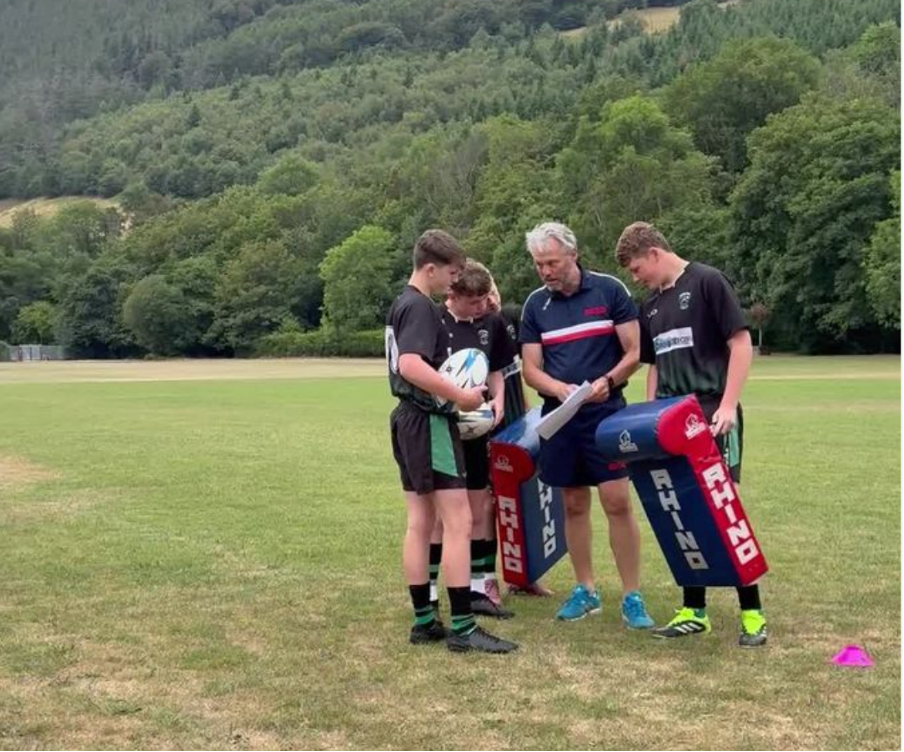
Over the last month, I’ve been filming content for our curriculum.
It’s been exciting to work with more than 100 girls and boys aged seven to 16.
Filming an activity isn’t like running a normal training exercise. Because I don’t know the players, I have to build rapport quickly. There is also little opportunity to pause or change the pace.
I often find myself scurrying around, adjusting the width and length of the training area to suit the group. When you know your players, you can usually judge these things fairly accurately before you begin.
The players also have to switch quickly from one activity to another, rarely getting long enough to discover their best solutions. That doesn’t worry me too much because my main aim is to capture the movement.
However, it matters to them. Rugby players tend to be competitive. The older players, especially, want to “win” their little battles.
On several occasions, we have carried on for longer than necessary simply to give them a proper go. such as scoring a try, or a technical outcome that shows the players what good looks like.
With the younger players, there have been moments of disappointment when someone hasn’t had their turn. In a normal five-to-ten-minute activity, everyone would have plenty of opportunities. Managing those expectations has become an important part of a filming day.
These observations have reminded me of two coaching principles that I need to carry back into normal training.
First, every exercise needs a clear standard. That might be success in a game situation,
Second, finish while the players still feel they could have done more. Don’t keep an activity going until their enthusiasm fades. Leave them wanting another turn, another chance and another go at winning their battle. That desire to return may be one of the clearest signs that an exercise has worked.