
Kind vs Wicked: Designing Better Learning Environments for Rugby
Not all practice environments are made equal...


When we think about skill development in rugby, it’s tempting to believe that the more “game-like” our training is, the faster our players will improve. But not all practice environments are created equal. This is where psychologist Robin Hogarth’s framework of kind vs wicked learning environments becomes invaluable.
Kind Learning Environments
Definition: Predictable rules, immediate and accurate feedback, clear cause-and-effect connections.
Example: A simple 3v2 drill with predictable defenders. A successful pass is directly tied to timing and technique.
Wicked Learning Environments
Definition: Unpredictable variables, delayed or misleading feedback, and outcomes that might occur by chance.
Example: A full-contact small-sided game where a sloppy offload works due to luck, making it harder for players to understand what actually worked.
Why It Matters for Coaches
Match day is a wicked environment—but if the foundation isn’t laid in kind settings, players will struggle to make consistent, informed decisions. The solution? A structured progression from kind to wicked, supporting learning with clarity and reflective coaching.
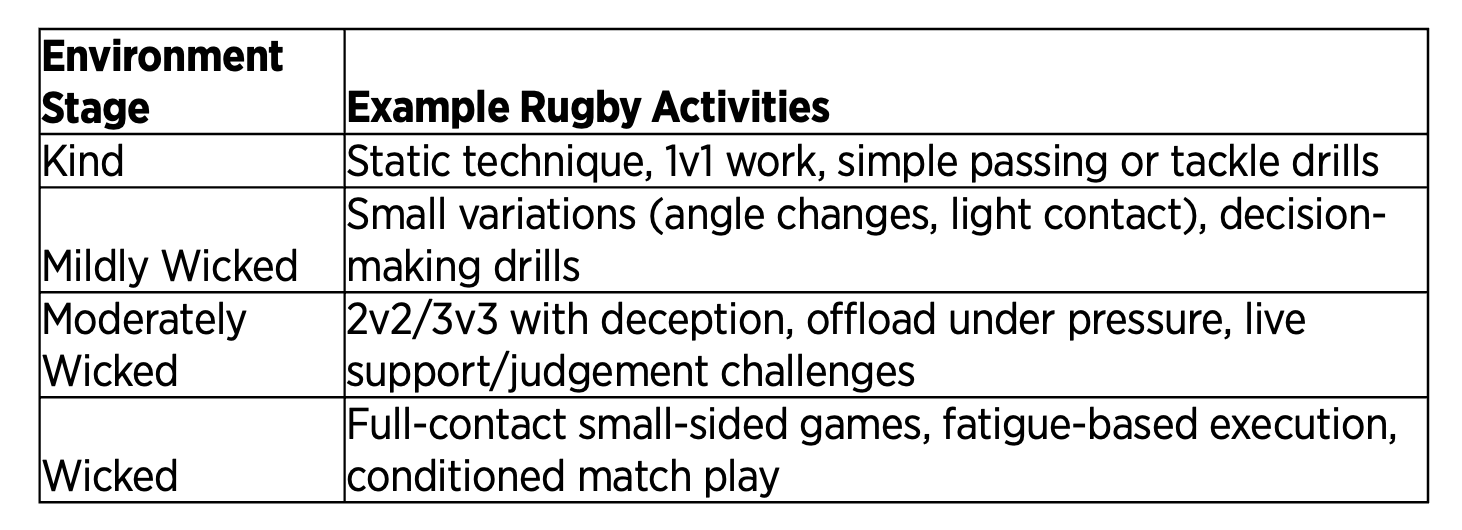
Clickable Session Builders
Kind to Mildly Wicked:
Check out the Tackle Session Builder: a structured session framework that escalates from individual technique to defensive units. Perfect for building clarity before introducing pressure.
LINKWicked Environment:
Use small-sided, full-contact game, like Small Area Adaptive Games, to stress-test player decision-making in realistic chaos.
LINK
How to Structure a Week
Start Kind: Focus on technique in a low-variance setting.
Introduce Mild Chaos: Add small angles or slightly unpredictable elements.
Increase Complexity: Shift towards deception, pressure, and decision-making.
Go Wicked: Use conditioned, high-intensity games to simulate match chaos.
Reflect and Separate: After wicked sessions, use video or debriefs to isolate decisions from luck.
The best coaches don’t just call drills—they design learning environments that match where their players are at in the process. Use this article as a blueprint to guide your progression from precision to chaos, and bridge training to match day with confidence.